
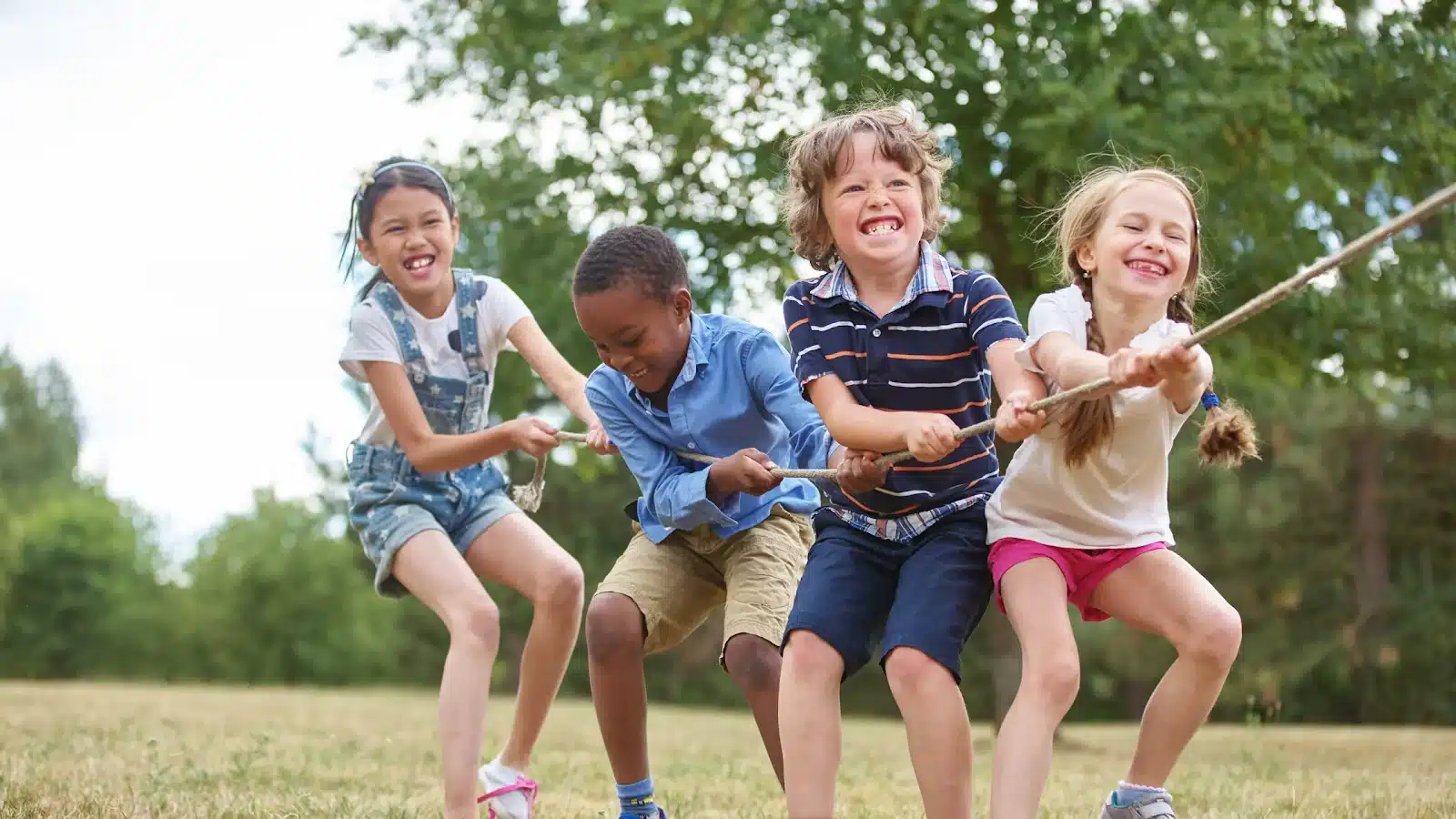
A child running through a park, climbing a tree, inventing a game with friends, or simply digging in the dirt may look like they are doing “nothing.” In reality, they are doing some of the most important work of childhood.
Outdoor play gives children the freedom to move, explore, imagine, negotiate, solve problems, take age-appropriate risks, and connect with the natural world. Just as importantly, it gives them something that increasingly structured childhoods can take away: time that belongs to children rather than adults.
The case for outdoor play isn’t about rejecting school, technology, organized sports, or academic goals. It’s about balance. Children need opportunities to learn and grow in structured environments, but they also need time to simply play.
Regular outdoor activity can support physical health, emotional well-being, social development, creativity, and a lifelong connection with nature. And the best part? Outdoor play doesn’t have to be complicated. Sometimes, all a child needs is a little space, some fresh air, and the freedom to decide what happens next.
Outdoor Play Is About More Than Exercise
One of the most obvious benefits of outdoor play is physical activity. The World Health Organization recommends that children and adolescents ages 5–17 get an average of at least 60 minutes of moderate-to-vigorous physical activity every day. More than 60 minutes can provide additional health benefits.
Outdoor play makes movement feel less like exercise and more like fun.
A child chasing a ball, riding a bicycle, climbing playground equipment, playing tag, or walking with friends can develop strength, balance, coordination, endurance, and cardiovascular fitness without thinking of it as a workout.
Younger children especially benefit from a variety of movements, including:
- Running and jumping
- Climbing and crawling
- Balancing
- Throwing and catching
- Riding bikes or scooters
- Exploring different surfaces and environments
For children under five, the WHO recommends even more overall movement throughout the day. Children ages 1–2 and 3–4 should get at least 180 minutes of physical activity spread throughout the day, with children ages 3–4 getting at least 60 minutes of moderate-to-vigorous activity.
The goal isn’t to turn playtime into a fitness program. It’s to give children plenty of opportunities to move naturally.
Outdoor Time Can Support Children’s Mental Well-Being
There’s something about being outside that can change the way children feel. Running through grass, climbing over rocks, building a mud pie, watching insects, or simply sitting beneath a tree can give children a break from the demands of school, screens, and structured activities.
Research has increasingly explored the relationship between children’s access to green spaces, physical activity, and emotional well-being. While outdoor time isn’t a replacement for professional mental-health care when a child needs it, regular opportunities to play outside can be one healthy part of a child’s overall routine.
Improved Mood
Outdoor play gives children space to release energy and engage in activities they genuinely enjoy.
Instead of sitting still or following instructions, they can run, shout, explore, imagine, and make their own choices. That sense of freedom can be especially valuable after a long day at school.
Natural environments may also provide a calmer setting than highly stimulating indoor environments. A quiet walk through a park or an afternoon spent playing in the backyard can give children an opportunity to slow down and reset.
Stress Reduction
Children experience stress, too. Schoolwork, social situations, busy schedules, family changes, and constant stimulation can all become overwhelming.
Outdoor play can provide a healthy outlet. Running, climbing, swinging, digging, or simply exploring can help children channel their energy while giving them a break from everyday pressures.
Even a short period outside can be a welcome change of environment.

Creativity and Focus
Unstructured outdoor play is particularly valuable because children aren’t always given a predetermined outcome.
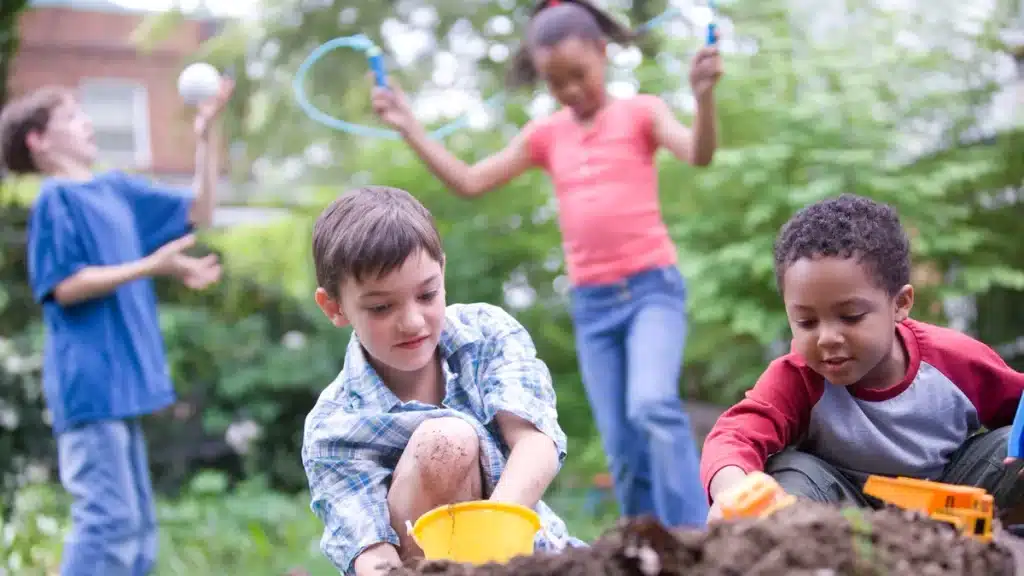
A stick can become a magic wand. A pile of leaves can become a fort. A patch of dirt can become a construction site. A group of children can turn an ordinary playground into an imaginary world.
This kind of play encourages children to make decisions, adapt rules, solve problems, and use their imagination.
For children who struggle with attention, outdoor activity can also provide an opportunity to move their bodies before returning to quieter tasks. Outdoor time shouldn’t be viewed as a cure for attention difficulties, but it can be a useful part of a balanced daily routine.
Outdoor Play Helps Children Build Social Skills
Children learn a tremendous amount from playing with other children.
They negotiate. They disagree. They compromise. They make up rules, change those rules, and sometimes start all over again.
That’s part of the learning process.
Outdoor environments often give children more freedom to create their own games and social situations than highly structured indoor activities do.
Learning to Cooperate and Communicate
Consider a simple game of hide-and-seek or capture the flag.
Children have to decide what the rules are, determine who gets to participate, solve disagreements, and figure out how to work together. They may have to explain an idea to a younger child or compromise when another child wants to play differently.
These everyday interactions help children practice:
- Communication
- Cooperation
- Negotiation
- Leadership
- Empathy
- Conflict resolution
- Problem-solving
And because the games are often invented by the children themselves, adults don’t have to manage every interaction.
The Value of Unstructured, Mixed-Age Play
Unstructured play can also bring children of different ages together.
Younger children can learn by watching older children, while older children can develop leadership and communication skills. Children learn that not everyone plays, thinks, or communicates in exactly the same way.
They also get opportunities to meet people outside their usual classroom or organized activity.
A neighborhood playground, local park, or shared outdoor space can become a place where children gradually develop confidence in social situations.
Outdoor Play Helps Children Develop a Connection With Nature
If we want children to care about the environment as they grow older, giving them opportunities to experience nature firsthand is a good place to start.
It’s one thing to learn about trees, insects, rivers, or wildlife from a textbook. It’s another to turn over a rock and discover a beetle underneath it, plant a seed and watch it grow, or spend an afternoon looking for birds.
Positive experiences in nature can help children develop curiosity, appreciation, and a sense of connection with the environment.
And outdoor exploration doesn’t have to involve a major camping trip.
It can be as simple as:
- Planting a small garden
- Looking for birds in the backyard
- Collecting interesting leaves
- Watching clouds
- Exploring a local park
- Catching fireflies
- Skipping stones
- Looking for insects
- Walking through a nature trail
The more opportunities children have to experience the natural world, the more familiar and meaningful it becomes.
How to Make Outdoor Play Safer
Giving children more freedom outdoors doesn’t mean ignoring safety.
The goal is to create an environment where children can explore while understanding reasonable boundaries. The amount of supervision a child needs will depend on their age, maturity, location, and the specific activity.
Establish Simple Family Rules
Before children head outside, establish a few clear rules they can easily remember.
For example:
- Stay away from busy roads.
- Look both ways before crossing a street.
- Stay within the agreed play area.
- Don’t approach unfamiliar animals.
- Tell an adult before going somewhere outside the agreed boundary.
- Wear appropriate clothing and protective gear for activities such as biking.
- Use sunscreen and stay hydrated when appropriate.
- Know where to go or who to contact if something feels unsafe.
The goal isn’t to make children afraid of the outdoors. It’s to give them the knowledge they need to make safer decisions.
Set Clear Boundaries
Children need to know where they can play and where they shouldn’t go.
For younger children, that may mean staying within a fenced yard or playing where an adult can easily supervise them. As children become more independent, boundaries can gradually expand according to their maturity and the safety of the environment.
Technology can also provide parents with an additional way to stay connected without giving a child a full smartphone.
For example, a kids’ smartwatch such as the COSMO JrTrack Smartwatch can allow parents to stay in contact with their child while they’re playing or exploring. Depending on the device and plan, features may include location tracking, messaging, and calling.
Used thoughtfully, technology can support independence rather than replace it: children get room to explore, while parents have a way to stay connected.

Simple Outdoor Play Ideas for the Whole Family
If your child is constantly saying, “There’s nothing to do,” you don’t need an elaborate plan.
Some of the best outdoor activities are simple, inexpensive, and open-ended.
Bike Rides
Biking gives children a chance to be active while developing balance, coordination, and confidence. Younger children can ride with an adult, while older children may enjoy exploring familiar routes with appropriate supervision.
Hiking and Nature Walks
A short walk can become an adventure when children are encouraged to look for birds, insects, unusual rocks, flowers, or animal tracks.
Don’t worry about covering a certain distance. Let children stop, investigate, and ask questions.
Outdoor Picnics
Take lunch outside and make an ordinary meal feel like an event.
Bring a blanket, some favorite snacks, and a ball or frisbee. You can visit a park, find a scenic spot, or simply eat in your own backyard.
Geocaching
Geocaching can turn a walk into a treasure hunt. Children can follow clues, use navigation skills, and work together to find hidden locations.
It’s a fun way to combine technology with real-world exploration.
Kickball and Classic Games
You don’t need expensive equipment to get children moving.
Kickball, tag, hide-and-seek, relay races, scavenger hunts, and obstacle courses can provide hours of entertainment while encouraging movement and cooperation.
Try the 1000 Hours Outside Challenge
Families looking for extra motivation can try the 1000 Hours Outside challenge.
The idea is to make outdoor time a regular part of family life by working toward 1,000 hours outside over the course of a year. That’s roughly 2.7 hours per day on average.
You don’t have to reach the exact number for the challenge to be worthwhile. Tracking outdoor time can simply help families become more intentional about getting outside.
How to Make Outdoor Play a Daily Habit
The biggest challenge isn’t necessarily finding activities. It’s making outdoor time part of everyday life.
Start small.
Send the kids outside for 20 minutes after school. Take a walk after dinner. Eat breakfast in the backyard on weekends. Visit a local park instead of spending another afternoon indoors.
You don’t need perfect weather, expensive equipment, or a packed schedule.
Try creating simple routines such as:
- Outdoor play before screen time
- A family walk after dinner
- One weekend morning at the park
- A daily backyard activity
- Screen-free outdoor time during school breaks
When outdoor play becomes a normal part of the day, children are more likely to see it as something they naturally do rather than another activity adults are asking them to complete.
Bring Back the Joy of Playing Outside
It may feel as though the days of children running outside until dinner are disappearing, but outdoor childhood isn’t gone. Families can still create it.
It doesn’t require turning back the clock or eliminating technology. It simply requires making room for something children have always needed: time to play.
Let children run. Let them get dirty. Let them invent games, climb, explore, make mistakes, negotiate with friends, and occasionally come home with grass stains on their clothes.
Give them reasonable boundaries, teach them how to stay safe, and then give them enough freedom to discover things for themselves.
Because outdoor play isn’t just a way to keep children busy.
It’s a chance for them to move their bodies, strengthen their minds, build friendships, develop confidence, explore nature, and experience the simple freedom of being a kid.
A little more time outside today can help create a healthier, happier, more independent childhood tomorrow.
Related Posts


