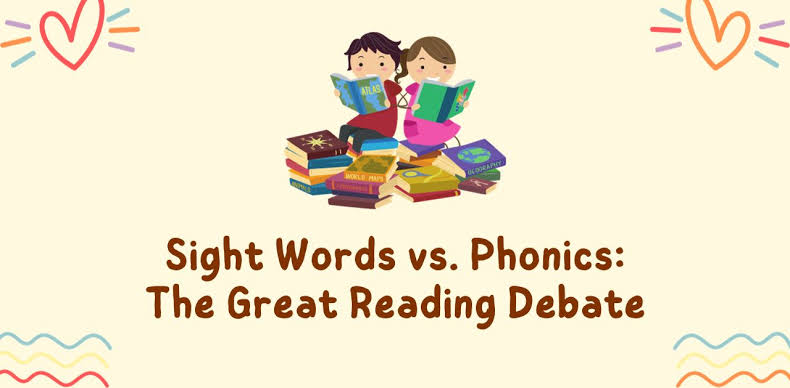
The Core Debate Between Decoding and Memorization
Phonics teaches children to connect individual sounds to specific letters and blend those sounds together to decode unfamiliar words. Sight words bypass decoding entirely, asking learners to memorize high frequency terms as whole visual units on sight. For decades, educators have debated which method deserves priority in the primary classroom. Parents caught in the middle often watch their kids struggle with one approach while thriving on the other. Understanding the mechanics of both systems reveals why neither works in total isolation.
Phonics provides a toolkit for independence because children can tackle words they have never seen before by applying rules. Memorizing sight words builds fluency quickly because many common English words break phonetic rules entirely and cannot be decoded easily. When children encounter words like was or said, phonics instruction often leads to mispronunciations unless those irregular patterns are explicitly taught. The real challenge lies in finding the exact balance point for an individual child based on their cognitive development and working memory capacity.
Many curricula swing wildly between these two poles depending on educational trends and shifting political landscapes. Phonics heavy approaches sometimes leave children stumbling over irregular words that appear on every single page of a beginner book. Sight word heavy approaches can lead to guessing habits where children look at the first letter and a picture to guess the rest of the sentence. Neither extreme produces a resilient reader who can handle complex texts independently. Assessing your child requires looking past school labels and examining how they handle a genuinely novel sentence.
How Phonics Builds Independent Readers
Systematic phonics instruction begins with phonemic awareness, which is the ability to hear and manipulate individual sounds in spoken language. Children learn that the word cat consists of three distinct sounds, represented by the letters c, a, and t. Once these letter sound correspondences are locked into memory, blending practice starts immediately. This mechanical process transforms abstract symbols into recognizable spoken words through pure logic rather than guesswork.
As children master consonant blends, vowel teams, and syllable types, their reading vocabulary expands exponentially without requiring separate memorization for every single entry. A child who understands how the silent e alters the vowel sound can read make, bake, and lake effortlessly. This rule based framework reduces cognitive load because the brain relies on established patterns instead of storing thousands of unrelated visual shapes. Independent reading emerges naturally when a child realizes they possess the decoding power to tackle words printed on a cereal box, a street sign, or a library book.
The downside of strict phonics is the frustration it causes when children encounter irregular words early in their reading journey. English contains many words borrowed from other languages that defy standard decoding rules. If a child tries to sound out the word the using short vowel sounds, they end up confused and discouraged. Effective phonics programs introduce irregular words as necessary exceptions while keeping the focus firmly on predictable letter sound patterns. Guarding against fatigue during decoding practice remains essential for maintaining enthusiasm.
The Practical Limits and Uses of Sight Words
Sight words serve a specific purpose by bridging the gap in early texts where decodable words sound stilted and unnatural. Traditional lists like Dolch and Fry contain words that appear with high frequency in children books, including pronouns, conjunctions, and common prepositions. Memorizing these words allows young readers to move beyond choppy single word decoding and experience the rhythm of natural sentence structure. Without sight words, early reading material would consist entirely of phonetic extremes like the fat cat sat on the mat.
However, treating sight words as pure visual memorization ignores how the human brain actually stores written language. Neuroscientists have shown that proficient readers do not take pictures of whole words with their brains. Instead, they quickly map the sounds and letters of every word through a process called orthographic mapping, even for irregular words. Flashcard drills that rely purely on visual memory can overwhelm working memory if a child is forced to memorize hundreds of disconnected words at once. The human brain quickly hits a wall when trying to store arbitrary visual symbols without underlying phonetic anchors.
When a child relies too heavily on sight word memorization, they often hit a plateau around third grade when texts introduce multisyllabic academic vocabulary. Without strong decoding skills to fall back on, these students resort to guessing based on the first letter and context clues. This guessing habit causes severe reading comprehension breakdowns when the text becomes complex and dense. Sight words should function as a temporary scaffolding rather than the main engine of literacy development. Balancing flashcard practice with spelling analysis helps children anchor those irregular words permanently.
Identifying the Dolch and Fry Word Lists
Educational publishers rely heavily on standardized word lists compiled decades ago to determine which vocabulary children must memorize. The Dolch list prioritizes pre primer through third grade words, while the Fry list extends much further into academic and upper level reading material. Teachers often test children on these lists weekly to track fluency gains and reading level readiness. Parents can easily replicate these lists at home using simple index cards or digital flashcard applications.
Despite their widespread use, these lists contain words that actually become decodable once children learn advanced phonics rules. Words like out, down, and all are often classified as sight words in kindergarten, but they follow predictable phonics patterns taught later in first grade. Categorizing them strictly as sight words can create unnecessary memorization work for young learners. Reviewing your child list to see which words can be sounded out helps reduce unnecessary flashcard drilling.
Diagnosing Which Method Your Child Needs
Observing your child during a reading session provides immediate clues about whether they lean too heavily on phonics or sight words. If your child stops at every single word and sounds them out meticulously, even simple words they have seen dozens of times, they lack automaticity and sight word recognition. Conversely, if your child skims a page, looks at the pictures, and makes up words that start with the right letter, they are relying on guesswork and need firmer phonics instruction. Both extremes require targeted intervention to get the reading process back on track.
Check how your child handles a nonsense word test to evaluate their true decoding strength. Ask them to read fabricated words like blip, rast, or flook using standard phonics sounds. A child with strong phonics skills will breeze through these made up words because they apply rules rather than memory. A child struggling with phonics will freeze or guess based on a vaguely familiar real word that looks similar. This diagnostic step strips away memorization and reveals the underlying health of their decoding machinery.
Another diagnostic indicator is spelling performance, which serves as a mirror for reading ability. Spelling requires pulling sounds apart and matching them to letters, which is the exact reverse of reading decoding. If a child reads sight words well but spells them completely wrong on paper, their visual memory is masking a weak phonics foundation. Strengthening phonics usually results in dramatic improvements in both reading accuracy and spelling capability. Pinpointing these specific friction points prevents you from wasting time on the wrong remediation strategies.
Classroom Realities and Homework Friction
School reading policies often confuse parents because districts switch methodologies based on prevailing instructional trends. One year your child might bring home heavily decodable books packed with phonetic word families, while the next year brings bags of sight word flashcards. This whiplash leaves parents wondering how to support their child without contradicting what is happening in the classroom. Understanding the school approach helps you align your home practice with their daily instruction without causing confusion.
Homework battles over sight word flashcards are a common source of stress in households with early elementary students. Sitting at the kitchen table drilling twenty flashcards after a long school day often ends in tears and power struggles. Children resist tasks that feel arbitrary and disconnected from actual storytelling or meaningful content. Swapping traditional flashcards for games, hunts around the house, or writing words in colored sand lowers the temperature. Making the practice tactile engages different neural pathways and reduces resistance significantly.
Communicating with your child teacher provides clarity on where the classroom instruction currently stands. Ask specific questions about whether the reading group focuses on blending CVC words or memorizing weekly vocabulary lists. If you notice a mismatch between your child struggles at home and the school focus, you can supplement accordingly. A child struggling with decoding needs extra phonics games at home, regardless of what the weekly spelling list dictates. Keeping lines of communication open prevents your child from falling through the cracks of a rigid curriculum.
Practical Exercises for Blending Both Approaches
Combining phonics and sight words requires a deliberate strategy that anchors irregular words to their phonetic roots whenever possible. Even irregular words like said have a starting consonant and a final sound that are completely regular. When teaching a sight word, highlight the parts the child already knows through phonics before focusing on the tricky part. This strategy transforms a mystery word into a puzzle with only one or two pieces to memorize.
Multisensory methods help cement both phonics rules and sight words into long term memory effectively. Instead of looking at a flat card, have your child trace letter shapes in salt, build words with plastic magnetic tiles, or air write words while saying the sounds aloud. These physical actions engage kinesthetic and auditory memory systems alongside the visual cortex. Children who struggle with traditional paper flashcards often thrive when movement and texture are added to the learning routine.
Reading books together daily provides the ultimate testing ground for applying these combined skills in context. Point out phonetic patterns in stories while enjoying the plot rather than turning reading time into a clinical quiz. If your child stumbles on a sight word, gently supply it so the narrative flow is not broken completely. Balance direct skill instruction with genuine enjoyment of literature to keep your child motivated. The goal is building a lifelong reader, not just passing a weekly spelling test.
Frequently Asked Questions
Should I stop using sight word flashcards entirely?
Stopping flashcards entirely is unnecessary if you use them strategically for genuinely irregular words. Strip out words that your child can already sound out using basic phonics rules. Limit drill sessions to a few minutes a day and focus on contextual reading rather than isolated memorization.
How do I know if my child is just guessing words?
Watch your child eyes and finger movements as they read a challenging sentence on a new page. If they look only at the first letter and the picture to blurt out a guess, they are bypassing decoding. Cover the pictures with a sticky note to force them to rely entirely on the print.
What is orthographic mapping?
Orthographic mapping is the mental process your brain uses to permanently store written words for instant retrieval. It connects the sounds of a spoken word to the letters of a written word. This process happens naturally when a child has strong phonics skills and applies them consistently.
Are leveled readers harmful to beginning readers?
Leveled readers that rely heavily on repetitive predictable sentence patterns can encourage guessing habits. Children often memorize the pattern and recite the sentence without actually looking at the individual words. Pairing leveled books with heavily decodable texts prevents this habit from forming.
When should my child transition from phonics to advanced reading?
Children transition naturally as they master single sounds, consonant blends, and vowel teams into multisyllabic word attack skills. This shift usually happens during late first grade or second grade as they encounter longer words. Phonics instruction evolves into morphology, teaching prefixes, suffixes, and root words.
Take the Next Step With Your Child Today
Look at the books currently sitting on your child nightstand and evaluate their actual reading behavior tonight. Cover the pictures on the page and ask your child to read a paragraph using only the printed letters. Notice whether they freeze, guess wildly, or systematically sound out the unfamiliar words. Use that single observation to choose your next targeted practice activity tomorrow.
Related Posts