Introduction
Somewhere between the first sleepless nights and the first day of kindergarten, a child’s brain does more building than it will ever do again. Parents often sense this instinctively — the frantic pace of change, the way a baby who couldn’t hold up her own head is suddenly stacking blocks and demanding a specific cup at dinner. What’s harder to sense is what’s actually driving all that change, and which parts of it parents can meaningfully influence.
Childhood development isn’t a single track. It runs across several lanes at once — physical, cognitive, language, and social-emotional — and they don’t always move at the same speed. A child can be ahead in vocabulary and behind in fine motor skills, and that’s completely ordinary. Understanding how these pieces fit together, and where the real warning signs lie, takes some of the guesswork out of parenting without turning every skipped nap into a crisis.
The Brain’s Busiest Construction Project
A newborn’s brain starts out at roughly a quarter of adult size. By age three it’s around 80% of adult size, and by five it’s close to 90%. That statistic gets repeated so often it’s become a bit of parenting folklore, and it’s worth being precise about what it actually means. Brain size grows quickly in early childhood, but brain maturation — particularly in the prefrontal cortex, the region responsible for planning, impulse control, and judgment — continues well into a person’s mid-20s. So the early years aren’t a closing window so much as the pouring of a foundation; what gets built on top of it keeps going for two more decades.
What happens during those early years is mostly about connections, not cell count. Babies are born with nearly all the neurons they’ll ever have, but the brain forms new synaptic connections at an extraordinary rate in infancy — commonly cited at over a million per second in the first years of life. Later, in a process called synaptic pruning, the brain trims away connections that aren’t being used, keeping the pathways that get reinforced through repeated experience. This is part of why consistent, responsive interaction with caregivers matters so much early on: it’s quite literally shaping which neural pathways stick around.
How Pediatric Milestones Actually Work
Most parents are familiar with milestone checklists from well-child visits, but the checklists themselves changed significantly in 2022, when the CDC and the American Academy of Pediatrics revised them for the first time since 2004. The update was substantial enough to generate real debate among pediatricians and therapists, and it’s worth knowing what changed and why.
The old checklists were based on the 50th percentile — the age by which about half of children reach a given skill. The revised checklists moved to the 75th percentile, listing the age by which roughly three out of four children are expected to have reached a milestone. In practice, that pushed several benchmarks later:
The Four Domains Pediatricians Track
- Physical/motor — from head control and reaching in infancy to running, climbing, and hand-eye coordination in the toddler and preschool years.
- Cognitive — problem-solving, memory, cause-and-effect thinking, and eventually early literacy and number sense.
- Language/communication — from cooing and babbling to first words, two-word phrases, and full sentences.
- Social-emotional — attachment, self-regulation, sharing, and the beginnings of empathy.
None of these develop in isolation. A toddler working hard on walking may temporarily slow down on new vocabulary, simply because attention and energy are finite resources at that age.
Why Relationships Do More Than Toys
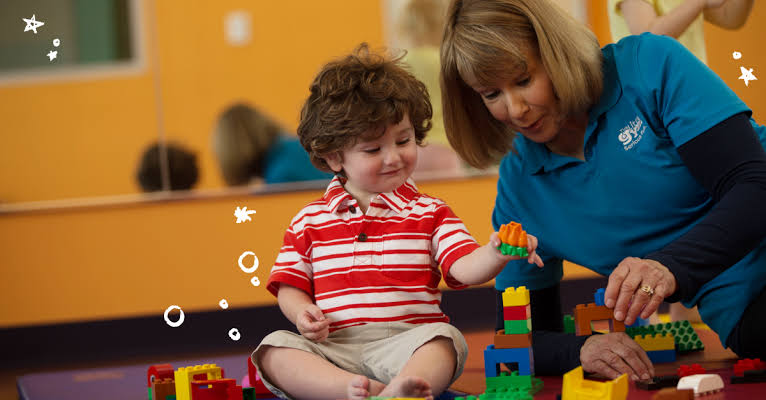
One of the more consistent findings across decades of child development research is that the quality of a child’s relationships predicts outcomes better than the quantity of stimulation or the sophistication of toys and programs. Researchers sometimes describe this as “serve and return” interaction: a baby babbles or points at something, and a caregiver responds — with eye contact, words, or a matching gesture. Repeated over thousands of small exchanges, this back-and-forth is what builds the neural architecture for language, emotional regulation, and later social skills.
This has practical implications. Reading aloud, narrating everyday activities, and simply talking to a baby before they can talk back all contribute measurably to later language development. Chronic stress, neglect, or inconsistent caregiving, on the other hand, can interfere with this process — not because a single hard day damages a child, but because a pattern of unpredictability makes it harder for the developing brain to build stable expectations about the world.
When to Seek Professional Advice
It’s natural to worry if your child doesn’t meet every milestone at the exact time. However, there are some signs to watch out for:
– Lack of eye contact or response to sounds by 6 months
– Inability to sit up or support their own weight by 9 months
– Not walking by 18 months
– Speech delay or lack of interest in communicating by age 2
If you notice any of these signs, don’t panic. A pediatrician can assess your child’s development and offer support or therapies if needed. Early diagnosis and intervention are key to helping children reach their full potential
What Parents Can Actually Do
The research doesn’t point toward elaborate enrichment programs or expensive educational toys. It points toward a handful of unglamorous, repeatable habits: talking and reading to children often, responding to their attempts at communication, providing predictable routines, allowing unstructured play, and managing the household’s stress levels as much as reasonably possible. None of this guarantees a particular outcome — genetics and temperament matter too — but it consistently shows up as the most influential set of factors a caregiver actually controls.
Frequently Asked Questions
At what age should I be concerned about speech delays? If a child isn’t saying any words by 15 to 18 months, isn’t combining words by age 2, or loses previously acquired language skills at any age, it’s worth raising with a pediatrician or requesting a speech-language evaluation.
Do the 2022 CDC milestone changes mean my child is “behind” if they haven’t hit an old benchmark? No. The updated ages reflect when three-quarters of children typically reach a skill, not a hard deadline. A child slightly outside that range isn’t automatically delayed, but persistent gaps across several areas are worth discussing with a doctor.
Is it too late to help my child’s development if they’re already past age 5? No. Brain plasticity is highest in early childhood but doesn’t disappear — the brain continues developing into the mid-20s, and children of any age benefit from responsive relationships, language exposure, and consistent routines.
Conclusion
Childhood development is less a race than a layered process, with early relationships and everyday interactions doing more of the heavy lifting than most parents expect. The 2022 update to pediatric milestone checklists is a useful reminder that even the tools professionals use are approximations, built to prompt conversation rather than deliver a verdict. The most durable takeaway from decades of research isn’t a specific age or number — it’s that consistent attention, talk, and responsiveness in the ordinary moments of a day matter more than any single milestone hit early or late.
Related Posts