Sleep can be one of the first things to disappear when family life gets busy. Homework runs late, sports practice ends after dinner, screens become difficult to put down, and younger children suddenly discover they are very much not tired at bedtime. Yet sleep is not simply “downtime.” For growing children, it supports attention, learning, emotional regulation, physical health, and healthy development.
The amount children need changes substantially with age. The American Academy of Sleep Medicine recommends 10–13 hours for preschoolers, 9–12 hours for children ages 6–12, and 8–10 hours for teenagers. For younger children, the recommended totals include naps.
The challenge for parents is turning those recommendations into ordinary family life. Fortunately, better sleep rarely requires expensive gadgets or elaborate routines. Consistency, a suitable sleep environment, sensible screen boundaries, daytime activity, and attention to possible sleep problems can make a meaningful difference.
Why Healthy Sleep Matters for Children
Children’s brains and bodies are developing rapidly, which makes adequate sleep particularly valuable. Poor or insufficient sleep can show up as irritability, difficulty concentrating, reduced alertness, behavioral problems, and problems with learning. Over time, inadequate sleep is also associated with health concerns including obesity, type 2 diabetes, poor mental health, and injuries.
Sleep also plays a role in memory and learning. During sleep, the brain processes and consolidates information gathered during the day. Research supported by the NIH has found that preteens who regularly slept less than nine hours showed differences in brain structure and had more difficulties involving mood and thinking than children who met the recommended amount. The study shows an association rather than proving that insufficient sleep alone caused those differences, but it adds to the evidence that sleep matters during brain development.
There is also a practical benefit parents notice quickly: a well-rested child is generally better equipped to handle frustration, school demands, social interactions, and the ordinary ups and downs of family life.
For infants under 4 months, sleep patterns vary considerably, so the standard age-based recommendation above does not apply in the same way.
Build a Predictable Bedtime Routine
Children generally cope better with bedtime when they know what is coming next. A routine also gives the brain and body a transition period between daytime activity and sleep.
A simple routine might look like:
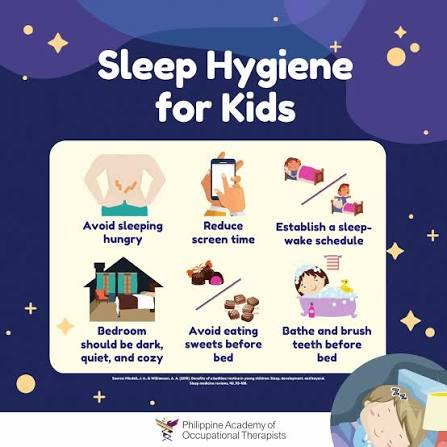
Bath or wash → pajamas → brush teeth → quiet story → lights out.
It does not have to be elaborate. What matters most is that the sequence is familiar and happens at roughly the same time each night.
The same principle applies to waking. Keeping bedtime and wake time reasonably consistent helps reinforce the child’s daily sleep-wake rhythm. The CDC recommends regular bedtimes and wake times, including on weekends.
Weekend flexibility is fine, particularly for older children, but dramatic shifts can make Monday mornings harder. For children who struggle with sleep schedules, keeping weekend wake-up times relatively close to school-day times can be useful.
Make the Bedroom a Place for Sleep
A child’s sleep environment does not need to resemble a luxury hotel. It simply needs to be comfortable and conducive to winding down.
Aim for a bedroom that is:
- Quiet enough for uninterrupted sleep
- Comfortable in temperature
- Dim or dark at bedtime
- Free from unnecessary electronic distractions
- Associated primarily with sleep and relaxation
For older children, a phone charging outside the bedroom can be more effective than repeatedly asking them not to check it. Removing the temptation is often easier than relying on willpower at 10:30 p.m.
For babies, safety takes priority over comfort accessories. The American Academy of Pediatrics recommends placing infants on their backs on a firm, flat sleep surface without soft bedding, pillows, bumper pads, or stuffed toys. Parents are advised to room-share without bed-sharing, preferably for at least the first six months.
Set Clear Boundaries Around Screens
Screens can interfere with children’s sleep in several ways. They can keep children mentally engaged, encourage later bedtimes, expose them to stimulating content, and provide a steady stream of notifications and social interaction when the child should be winding down.
The exact timing matters less than having a consistent boundary that your child can understand.
For example, instead of saying, “You need to stop using your phone earlier,” establish a household rule: devices charge in the kitchen after 9 p.m. For a younger child, the rule might simply be that tablets and television end after the bedtime story begins.
Parents should also model the behavior. A child who is asked to put away a tablet while watching a parent scroll through a phone in bed is receiving a mixed message.
Recent CDC research illustrates how closely heavy screen use and sleep can travel together. Among U.S. teenagers surveyed from 2021–2023, 50.4% reported four or more hours of non-schoolwork screen time per day. Teens with that level of use were more likely to report being infrequently well-rested and having irregular sleep routines.
Give Kids Enough Time to Be Active During the Day
Sleep does not begin at bedtime. A child’s daytime routine influences what happens at night.
Regular physical activity and time outdoors can help children arrive at bedtime ready to rest. Active play also helps create a healthier balance between periods of stimulation and recovery.
That does not mean exhausting a child immediately before bed. Vigorous activity close to bedtime may energize some children rather than calm them. Earlier in the day, however, movement, outdoor play, walking, cycling, sports, and ordinary active games can all contribute to a healthy routine.
Morning and daytime light also help regulate the body’s circadian rhythm—the internal timing system that coordinates sleep and wakefulness. A child who spends much of the day indoors under artificial lighting and then receives bright light from screens late at night may have a less helpful pattern of light exposure.
Pay Attention to Food, Caffeine and Evening Stimulation
For younger children, caffeine is generally unnecessary. For tweens and teenagers, it can become a significant sleep issue through coffee, energy drinks, tea, cola, chocolate, and other products.
The American Academy of Pediatrics’ HealthyChildren guidance advises avoiding caffeine several hours before bedtime. Families should also be mindful of large or uncomfortable meals late at night.
Evening stimulation matters beyond food and technology. Exciting games, frightening videos, arguments, intense homework sessions, or stressful conversations can make it harder for a child to settle.
Help Children Handle Worries Before Bed
Children can carry surprisingly complicated worries into the bedroom: a friendship problem, tomorrow’s test, fear of the dark, concerns about school, or anxiety about something happening at home.
A brief “worry window” earlier in the evening can help. Give the child time to talk, solve what can be solved, and write down what needs attention tomorrow. Then bedtime can become a calmer period rather than the moment when every unresolved concern suddenly appears.
For younger children, a predictable story, quiet conversation, breathing exercises, or another calming activity may work better than a lengthy discussion.
Watch for Signs That Something More Is Wrong
Occasional bad nights are normal. Persistent sleep problems deserve more attention.
Talk with a pediatrician if a child regularly has significant difficulty falling or staying asleep, is excessively sleepy during the day, snores loudly or persistently, appears to stop breathing during sleep, has unusual nighttime behaviors, or continues to struggle despite consistent healthy sleep habits.
Snoring in particular should not automatically be dismissed as harmless. Sleep-disordered breathing can interfere with restorative sleep and may require medical assessment.
Parents should also remember that sleep problems can have different causes. Anxiety, asthma, allergies, medications, restless legs, sleep apnea, developmental conditions, pain, and other issues can all affect sleep. Improving bedtime habits is useful, but it is not a substitute for medical evaluation when symptoms persist.
These figures should not be interpreted as a universal picture of children worldwide. They are U.S. data, and children’s sleep is shaped by family schedules, school systems, culture, living conditions, health, and socioeconomic circumstances.
A Practical Sleep Plan for Families
Rather than changing everything at once, start with the habits most likely to have an immediate effect.
- Choose a realistic bedtime based on when your child needs to wake and the recommended sleep range for their age.
- Keep wake-up times reasonably consistent, including weekends.
- Create a short, repeatable bedtime routine that signals the day is ending.
- Set a screen curfew and keep phones, tablets, televisions, and gaming devices out of bedrooms when practical.
- Encourage active daytime routines and exposure to natural light.
- Keep the bedroom quiet, comfortable, and sleep-focused.
- Limit evening caffeine, particularly for older children and teenagers.
- Make time for worries before bedtime, rather than allowing them to become a nightly argument.
- Look at the whole schedule. A bedtime problem may actually be caused by late activities, homework, early school start times, or an inconsistent routine.
- Seek professional advice when sleep problems persist or when symptoms such as loud snoring, breathing pauses, or excessive daytime sleepiness appear.
For adolescents, there is an additional challenge: puberty naturally shifts the body’s sleep timing later, making it harder for many teenagers to fall asleep early. Early school schedules can therefore create a mismatch between biological sleep timing and the time teenagers must wake. The CDC notes that later school start times are associated with more adolescents getting adequate sleep
Frequently Asked Questions
Should children sleep in on weekends?
Some flexibility is perfectly reasonable, but very large differences between weekday and weekend schedules can make it harder to return to the school routine. Keeping wake times reasonably consistent is usually a better approach for children who already struggle
Does a bedtime routine really make a difference?
Yes. A predictable routine helps children transition from stimulating daytime activities to sleep. It does not need to be complicated—a consistent sequence such as brushing teeth, reading, and going to bed can be enough.
What if my child says they are not tired?
First check whether the schedule is appropriate. If bedtime is much earlier than the child’s natural sleepiness, they may resist it. At the same time, children can become overtired and appear energetic or irritable rather than sleepy, so persistent bedtime resistance is worth looking at in the context of the entire day’s routine.
Should parents give children melatonin?
Melatonin should not be treated as a routine replacement for healthy sleep habits. If a child has ongoing sleep difficulties, parents should discuss the situation with a pediatrician before using melatonin or other sleep aids. The cause of the sleep problem should be considered rather than simply trying to induce sleep.
Related Posts