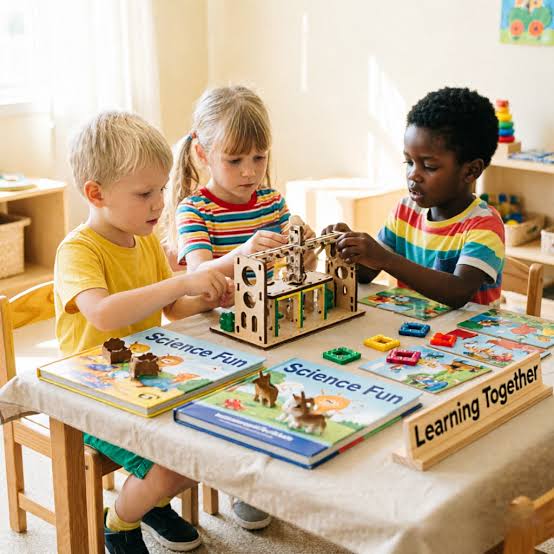
A child who measures flour for a recipe, builds a bridge from cardboard, plants seeds, takes apart an old toy, or uses blocks to solve a math problem is doing more than keeping busy. They are testing ideas, making decisions, noticing cause and effect, and discovering what happens when a plan succeeds—or fails.
That is the appeal of hands-on learning. Instead of receiving information only through explanation, children interact with concepts through movement, materials, play, experimentation, and real-world problems. Research in child development and education suggests that these experiences can support cognitive, physical, social, and emotional development, particularly when activities are thoughtfully connected to what children are expected to learn.The important qualification is that “hands-on” does not automatically mean “effective.” Simply giving a child a pile of materials is not a substitute for good teaching. The strongest experiences combine doing with thinking, conversation, reflection, and appropriately timed guidance.
What Hands-On Learning Actually Means
Hands-on learning is a broad term. It can include laboratory experiments, building projects, cooking, gardening, art, manipulatives in mathematics, outdoor exploration, dramatic play, craft activities, fieldwork, and project-based learning.
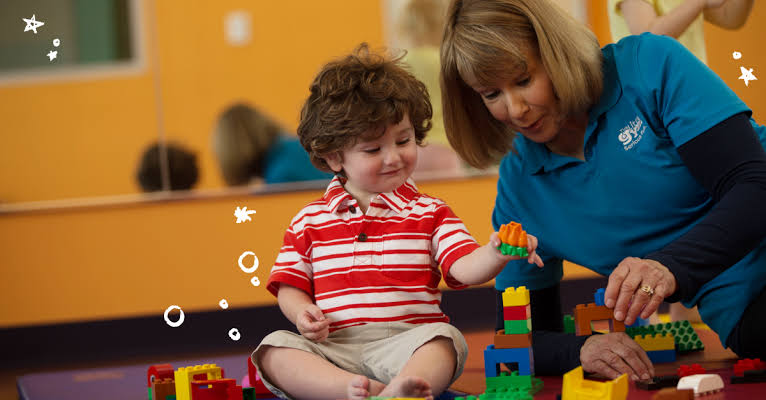
For younger children, it often looks like play: sorting objects, stacking blocks, pouring water, pretending to run a shop, or investigating leaves collected outdoors. For older children, it may involve designing a simple machine, conducting a science investigation, constructing a model, measuring materials, or working on a community-based project.
The common thread is active engagement. The child is not merely listening to an explanation; they are interacting with something and using that interaction to develop or test an understanding.
The National Academies has emphasized the value of combining “hands-on” experiences with “minds-on” learning. In science education, for example, investigations can require children to observe, ask questions, make predictions, gather evidence, propose explanations, communicate results, and reflect on what happened. That combination is crucial. A child who builds a paper bridge and then discusses why it collapsed is learning differently from a child who simply builds one bridge after another without thinking about the result.
Why Doing Can Make Learning Stick
Concrete experiences give abstract ideas somewhere to land
Young children often encounter concepts before they have the vocabulary or abstract reasoning needed to understand them fully.
Consider fractions. A worksheet can show that one-half is smaller than one whole, but cutting an apple or dividing a piece of paper into equal sections gives the child a physical representation of the idea. Similarly, counting buttons, arranging objects by size, or comparing containers can make early mathematical relationships more tangible.
Research on early mathematics cautions that manipulatives are not automatically beneficial simply because they are physical. They work best when the activity connects children’s existing understanding with the formal concept they are being taught.
That distinction matters. A hands-on activity should have a learning purpose, even when it feels like play.
Children get immediate feedback
Hands-on activities also create a natural feedback loop.
A tower falls. A plant wilts. A model refuses to balance. A recipe produces a different texture than expected. These outcomes give children information they can use immediately.
Instead of hearing that a particular approach will not work, they can see the result and ask why. That creates opportunities for experimentation and revision—two habits that matter far beyond childhood.
The process can also make mistakes less threatening. Failure becomes information rather than simply a wrong answer on a page.
Hands-On Learning Supports More Than Academic Skills
One of the strongest arguments for hands-on learning is that its benefits can cross several areas of development at once.
Cognitive and problem-solving skills
Building, sorting, measuring, experimenting, and designing require children to make choices and adjust their thinking. Open-ended tasks can encourage planning, prediction, comparison, and problem solving.
Research on guided play is particularly useful here. A 2022 systematic review and meta-analysis examined 39 studies, with 17 included in the quantitative analysis, covering 3,893 children from ages 1 to 8. Guided play showed advantages over direct instruction for some outcomes, including early mathematics and shape knowledge, while also outperforming free play for spatial vocabulary. The researchers stressed, however, that results varied depending on how guided play was designed and implemented.That is a more useful conclusion than saying that play is always better than teaching. The evidence points toward a productive middle ground: children have room to explore, while adults structure the environment and provide useful guidance.
Motor development
Physical manipulation is also practice for the body.
Pouring water, threading beads, using scissors, drawing, building with small objects, digging in soil, or assembling materials can involve fine-motor coordination. Larger activities such as climbing, carrying, balancing, gardening, or outdoor construction engage gross-motor skills.
For young children especially, physical and cognitive development are not neatly separated. Playful interactions can combine sensory exploration, movement, communication, and problem solving in a single activity. UNICEF’s evidence-based Care for Child Development approach, developed with the World Health Organization, specifically uses play and responsive interaction to support motor, cognitive-language, and social-emotional development.
Social and emotional growth
Hands-on activities can also create situations that require children to cooperate.
A group building project might involve negotiating who does what. A cooking activity may require taking turns. A science investigation can prompt children to disagree about what will happen and then examine the evidence together.
These ordinary interactions give children opportunities to practise communication, patience, flexibility, and persistence.
Play is especially valuable in this respect. UNICEF describes play as a setting in which children can develop social, emotional, cognitive, and physical skills while strengthening relationships with caregivers. Hands-On Learning Can Connect School to Everyday Life
Perhaps one of its most practical advantages is that hands-on learning makes the boundary between “schoolwork” and ordinary life less rigid.
A child can practise mathematics while:
- doubling a recipe;
- comparing prices at a shop;
- measuring furniture;
- sorting laundry;
- dividing snacks equally; or
- keeping track of scores in a game.
Science can appear in the kitchen, garden, playground, or bathroom. Literacy can emerge through writing instructions, labelling a model, keeping a nature journal, or explaining how something works.
This matters because children need opportunities to transfer knowledge from one situation to another. The National Academies’ work on learning has highlighted the importance of connecting classroom learning with knowledge and experiences from everyday settings.
These figures should not be interpreted as proof that every child needs expensive educational toys or elaborate projects. In fact, UNICEF notes that ordinary household objects, books, drawing materials, and natural items can support exploration and playful learning.How Parents and Teachers Can Make Hands-On Learning Work
The best activities do not need to resemble miniature school laboratories. They need to give children something meaningful to investigate.
Start with a question
Instead of immediately explaining how something works, ask a question.
“Which paper airplane will fly farther?”
“How can we make this tower stronger?”
“Which objects will sink?”
“What happens if we put the plant somewhere darker?”
A good question gives the activity a purpose and encourages children to make predictions.
Let children struggle a little
Adults naturally want to rescue children from frustration. Sometimes that is helpful; often it removes the most valuable part of the learning process.
If a child is building a bridge that keeps collapsing, try asking, “What could make the middle stronger?” rather than immediately showing the answer.
The goal is not to leave children stuck. It is to give them enough support to continue thinking for themselves.
Talk about what happened
Reflection turns an activity into learning.
After a project, ask what surprised the child, what worked, what failed, and what they would change next time. This conversation helps connect an experience with language and concepts.
It also reveals misconceptions. A child may successfully complete an experiment while holding an incorrect explanation for the result. Talking about the process gives an adult an opportunity to gently correct the misunderstanding.
Use inexpensive materials
Hands-on learning is not synonymous with expensive educational equipment.
Cardboard boxes, measuring cups, paper, string, recycled containers, stones, leaves, buttons, blocks, kitchen utensils, and household packaging can become useful learning materials when an activity has a clear purpose.
UNICEF’s work on learning through play specifically highlights the value of everyday objects and simple materials in supporting children’s exploration.
What Hands-On Learning Cannot Replace
There is a temptation to frame hands-on learning as the opposite of traditional teaching. That is too simplistic.
Children still need direct explanations, books, demonstrations, practice, feedback, vocabulary instruction, and opportunities to memorize essential information. Some concepts are also difficult to discover independently.
The most effective approach depends on the child’s age, prior knowledge, learning goal, and the design of the activity. Research on concrete experiences in early mathematics, for example, specifically warns that physical materials alone do not guarantee meaningful learning. Hands-on learning is therefore best viewed as one powerful part of a broader teaching toolkit.
Frequently Asked Questions
Is hands-on learning only useful for young children?
No. Younger children may benefit particularly from concrete experiences because many concepts are still being formed through sensory and physical interaction. Older children can use hands-on approaches for increasingly complex work, including experiments, engineering challenges, field studies, coding projects, and project-based learning.
Does hands-on learning improve academic performance?
It can, but the evidence is more nuanced than a simple “hands-on is better” claim. Studies show benefits for particular outcomes, including some mathematics, spatial, and early-learning skills, while effects vary by activity and instructional design.
Do parents need special toys or equipment?
No. Many useful activities can be created with ordinary household materials. What matters most is the opportunity to explore, make decisions, solve problems, communicate, and connect the experience with an idea the child is learning.
Conclusion
Hands-on learning works because it gives children something more valuable than information alone: an opportunity to use information.
When children build, measure, sort, investigate, experiment, create, and play, they can connect abstract ideas with physical experience. Along the way, they practise problem solving, coordination, communication, persistence, and curiosity.
The strongest approach is neither unlimited free play nor constant adult instruction. It is a thoughtful combination: meaningful experiences, clear learning goals, room for exploration, and enough adult guidance to help children turn what they do into what they understand.
For growing children, learning does not always need to look like learning. Sometimes it looks like a cardboard bridge on the living-room floor, muddy hands in a garden, a badly balanced tower, or a question that leads to another question. Those ordinary moments can become some of the richest learning opportunities a child receives.
Related Posts