
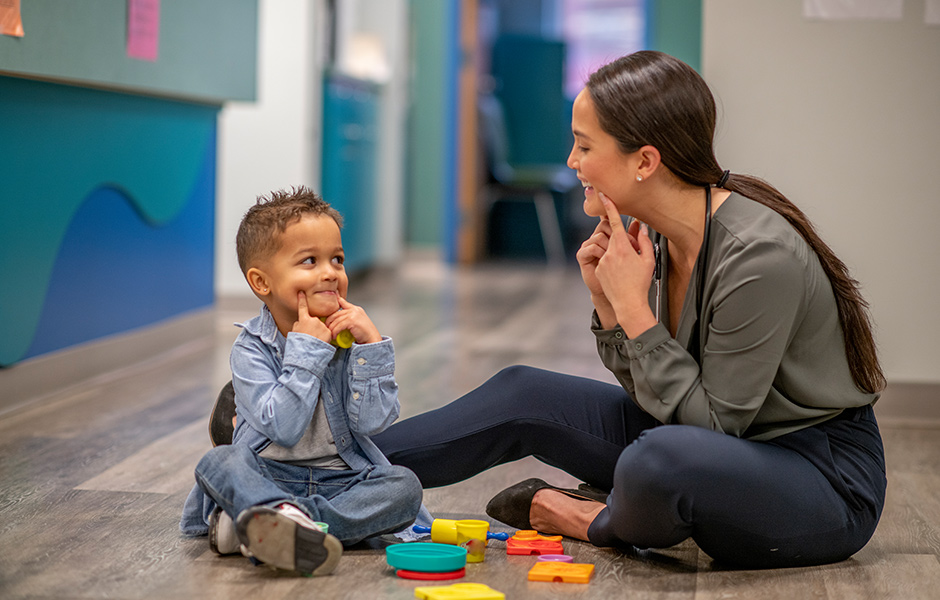
Both the child and its caretakers may feel alone when a child has speech or language difficulties. The good news is that speech therapy provides focused assistance that results in significant change. The importance of speech therapy, its benefits, and the steps parents and professionals should take to guaranty success are all covered in this article.
We will specifically examine evidence-based advantages, useful tactics, and the critical role of early intervention. Knowing the advantages of speech therapy for kids might help you make the proper decision if your child is having trouble communicating.
What Is Speech Therapy and Why It Matters

Speech therapy, often delivered by speech-language pathologists (SLPs), is a structured intervention focused on helping children improve communication. This includes:
- Articulation and phonological skills (how sounds are produced)
- Expressive and receptive language (using and understanding words, sentences)
- Pragmatics or social communication (turn-taking, using language in context)
- Oral-motor skills (muscles of the mouth and tongue)
- Fluency (e.g. stuttering) and voice control
The goal is to reduce barriers caused by speech problems and to equip children with effective communication tools.
Speech and language disorders are among the most common developmental challenges in childhood, affecting 5–8% of children in some studies. Left unaddressed, they can contribute to academic difficulties, social isolation, low confidence, and even long-term literacy and employment challenges. For children with multiple developmental needs, comprehensive therapy and rehabilitation services can provide coordinated support across multiple areas of development.
Major Benefits of Speech Therapy for Children

Below are some of the important gains that research and clinical practice affirm.
1. Clearer Speech, Better Intelligibility
One of the most immediate and visible benefits is improved articulation. Children learn to position their tongue, lips, and airflow correctly to produce sounds clearly. Over time, listeners understand them more easily.
In children with developmental language disorder, early intensive interventions (especially at ages 3–4) show positive effects on expressive phonological skills, which often endure in the medium term. Professional speech therapy services focus on evidence-based techniques to help children master proper sound production and improve overall intelligibility.
2. Accelerated Vocabulary Growth and Sentences
Children with expressive or receptive language delays often lag in vocabulary and sentence construction. Research suggests that speech therapy can double the rate of vocabulary growth in early delays, helping catch up to peers.
Therapy may also improve syntactic skills (grammar, sentence structure) and narrative abilities when interventions target those areas. Understanding techniques for improving pronunciation can help parents reinforce these skills at home between therapy sessions.
3. Enhanced Academic Performance and Literacy
Language ability underpins almost all school learning, reading, writing, comprehension, problem solving. When children communicate more effectively, they more readily engage in class, ask questions, and absorb information.
Studies show that children who receive speech and language support tend to participate more fully in classroom tasks and develop meta-language awareness (awareness of language itself) which supports literacy skills.
4. Boost in Social Skills and Peer Interaction
Communication is the foundation of relationships. Children with speech challenges may withdraw or avoid talking for fear of misunderstanding. This inhibits building friendships.
Speech therapy helps children:
- Use language to initiate and sustain conversations
- Interpret social cues and respond appropriately
- Practice storytelling, shared play, and turn taking in context
This enhances their social confidence and peer acceptance. For children facing broader behavioral or social challenges, behavioral health support can complement speech therapy to address emotional and social development holistically.
5. Greater Self-Confidence and Emotional Well-Being
As children become more competent communicators, their self-esteem typically improves. They feel less frustration and more agency in expressing their needs, thoughts, and feelings.
Moreover, language growth has been linked to emotional regulation: children who can verbalize internal states (like “I’m upset”) are better able to manage behavior and stress. Understanding how behavioral health impacts children and adolescents highlights the important connection between communication abilities and overall mental wellness.
6. Early Intervention Prevents Long-Term Struggles
Delaying speech therapy can mean lost time and increasing disparity with peers. The earlier the intervention, the greater the benefit. Intervention in preschool and early school years yields higher effect sizes, especially in phonology and expressive language.
Furthermore, parent-implemented language programs (such as training parents to model and scaffold language during daily play) have shown significant gains in both expressive and receptive language over 12 months, and have even been linked to reductions in behavioral problems.
What Influences the Success of Speech Therapy?
Positive outcomes are not guaranteed, effectiveness depends on multiple factors.
Frequency, Intensity, and Dosage
Therapy must be consistent and sufficiently intensive to drive change. Reviews show that more frequent sessions and higher “dosage” (number of language targets practiced) are associated with greater impacts.
Individualization and Targeted Goals
Therapy should be customized to a child’s specific needs (articulation, vocabulary, syntax, pragmatics). Generic interventions yield weaker results.
Also, focusing on active ingredients, such as interactive modeling, recasting, scaffolding, produces better language growth than passive drills alone.
Generalization and Carryover
A strong program ensures children apply learned skills outside therapy sessions, at home, school, and in daily life. The therapist should actively coach caregivers, teachers, or peers to support generalization.
Collaboration and Family Involvement
Children do best when their support network is involved. Collaborating with parents, teachers, and caregivers ensures consistent reinforcement in natural settings. For families seeking comprehensive support, working with a pediatric care team that coordinates between specialists can help ensure all aspects of a child’s development are addressed.
What to Expect during Speech Therapy
Understanding the process helps manage expectations and maximize benefit.
Assessment and Goal Setting
A clinician begins with a detailed evaluation: standardized tests, observations, language sampling. From there, specific goals are created (e.g. “produce /s/ and /z/” or “use complex sentences expressing contrast”).
Structured Therapy Sessions
Typical elements include:
- Direct modeling and repetition
- Play-based language activities
- Visual supports (pictures, charts)
- Phonological drills or minimal pair contrast work
- Interactive dialogue with child (expanding, recasting)
Home Practice & Carryover
Caregivers may receive “homework” tasks or structured play ideas. These help reinforce progress. Therapy is not limited to the office, it thrives when spread into daily routines.
Progress Monitoring
Regular re-assessments track progress. Goals may be adjusted as new strengths and gaps emerge.
When Should You Consider Speech Therapy?
Look for signs that might indicate a delay or disorder. Common red flags include:
- Limited babbling or sounds by 12 months
- No first words by 15 months
- Few words or phrases by age 2
- Difficulties combining words by age 3
- Consistently unintelligible speech beyond age 4
- Trouble following stories or complex instructions
- Stuttering, voice issues, or social communication struggles
Practical Tips for Maximizing Benefits
To get the most from speech therapy:
- Choose a qualified therapist: ensure they are certified/licensed and experienced in child speech and language.
- Stay consistent: attend regularly, do the home practice, and avoid skipping sessions.
- Integrate therapy into daily life: use everyday conversations, play, reading, and routines as opportunities to practice.
- Use positive reinforcement: celebrate small successes and encourage risk taking.
- Communicate with your child’s school or caregivers: ensure continuity across settings.
- Set realistic expectations: progress may be gradual; celebrate incremental gains.
Frequently Asked Questions
Q: How soon can I expect to see results from speech therapy?
Early improvements in clarity or use of new words may appear within weeks; meaningful gains often emerge over months.
Q: Can speech therapy help children with conditions like autism or hearing loss?
Yes. Therapy is tailored to each child’s needs, children with autism, hearing impairment, or other conditions often benefit with adapted techniques.
Q: Is speech therapy only for young children?
No. While early intervention is ideal, children in older grades and even adolescents can make significant progress with well-targeted therapy.
Read More Articles Here!
Building A Strong Educational Foundation In Children
30 Fun Things To Do With Your Child Before They Start Kindergarten
Related Posts