Introduction
Ask a parent what they remember about “screen time” battles a decade ago, and most will tell you the fight was about limiting games, not choosing them. That conversation has shifted. Teachers now assign digital games as homework, occupational therapists use them in sessions, and school districts budget for game-based platforms the same way they budget for textbooks. The reason isn’t nostalgia for “edutainment” — it’s a growing body of evidence that well-designed games build real cognitive and social skills, not just quick reflexes.
None of this means every game on a tablet is doing a child’s brain a favor. The skill-building only shows up when a game is designed with intention — clear objectives, appropriate difficulty curves, and enough interactivity to require actual thinking rather than passive tapping. With that caveat in mind, here are ten specific skills that show up again and again in the research on what good educational games actually teach.
1. Problem-Solving Under Pressure
Most educational games are built around obstacles: a locked door, a broken bridge, a puzzle that won’t budge until a pattern is recognized. Kids learn to break a big problem into smaller steps, test an idea, watch it fail, and adjust — the same loop professionals call iterative problem-solving. Because games give instant feedback, that loop happens dozens of times in a single session, which is far more repetition than a worksheet typically offers.
2. Working Memory and Focus
Puzzle and strategy games often require holding several pieces of information in mind at once — a color sequence, an inventory of items, a set of rules that change as levels progress. This is a direct workout for working memory, the mental scratchpad kids rely on for everything from mental math to following multi-step instructions in class.
3. Persistence and Frustration Tolerance
Anyone who has watched a child retry the same level a dozen times has seen persistence being built in real time. Games are structured so failure isn’t punishing — a character respawns, a puzzle resets — which lowers the emotional stakes of trying again. That structure teaches kids that struggling with something difficult is a normal part of getting better at it, a mindset researchers often call productive struggle.
4. Collaboration and Teamwork
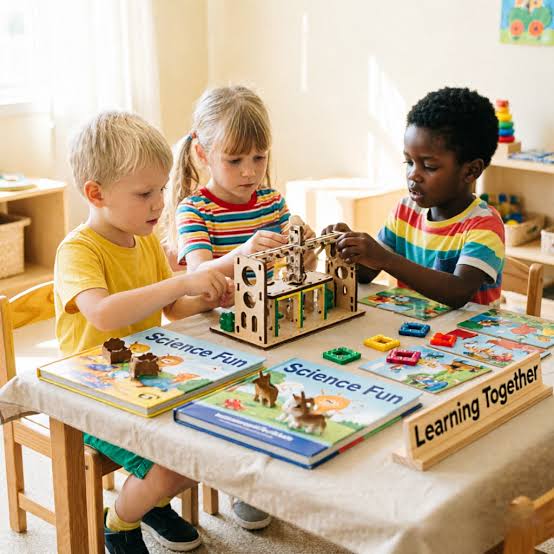
Multiplayer educational games, whether in a classroom or online, force kids to negotiate roles, share limited resources, and coordinate toward a shared goal. A cross-cultural study of 523 children aged 9 to 11 found that both serious games and traditional video games were positive predictors of social problem-solving skills across different cultural contexts, suggesting the collaborative benefits aren’t limited to one type of upbringing or one type of game.
5. Critical Thinking and Evidence-Based Reasoning
Strategy and simulation games routinely ask players to weigh trade-offs — spend resources now or save them, take the safe path or the risky shortcut. Games that involve managing a civilization, running a farm, or solving a mystery require kids to gather clues, form a hypothesis, and revise it as new information appears, which mirrors the scientific method more closely than most people realize.
6. Early Literacy and Language Skills
Story-driven games and reading apps expose children to vocabulary in context, which tends to stick better than vocabulary lists. Branching narratives, where a choice changes the outcome, also build comprehension skills, since kids have to track cause and effect across a storyline rather than just decode words on a page.
7. Number Sense and Mathematical Reasoning
Math games that use visual representations — number lines, grouped objects, area models — help kids build intuition for quantity before they’re asked to manipulate abstract symbols. This matters because a shaky number sense in early grades is one of the more reliable predictors of math struggles later on, and games offer a low-stakes way to practice it repeatedly.
8. Spatial Reasoning
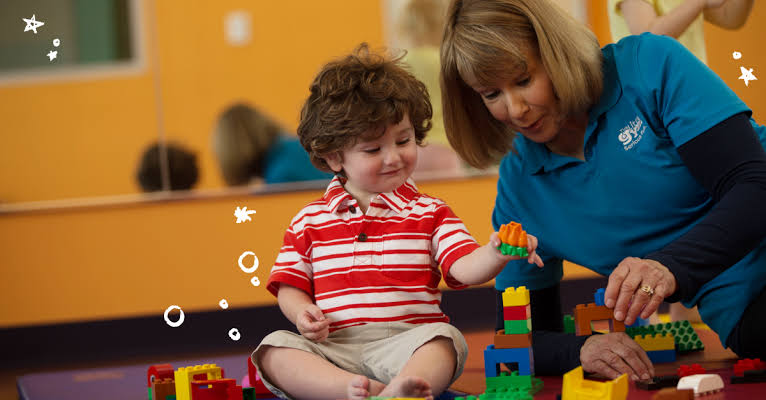
Building and construction-style games, along with many puzzle games, require rotating shapes mentally, judging distances, and planning layouts. Spatial reasoning is closely tied to later performance in geometry, engineering, and other STEM fields, and it’s a skill that doesn’t get much dedicated classroom time outside of games and hands-on activities.
9. Digital and Financial Literacy
Simulation games that involve budgets, trading, or resource management give kids a sandbox to practice decisions that would be risky to practice with real money. Some platforms explicitly teach saving, spending, and basic economic trade-offs through play, which gives children a working vocabulary for financial concepts years before they encounter a real bank account.
10. Self-Regulation and Goal Setting
Progress bars, achievement badges, and level structures teach kids to set a short-term goal, track their progress toward it, and adjust their effort accordingly. That habit of monitoring your own performance and adjusting your strategy is a form of metacognition, and it transfers well beyond gaming into homework, sports, and other structured activities.
Although gaming was historically an entertainment-driven pursuit, games are now widely accepted as an impactful educational tool that engages children while teaching them an array of skills. Current research on the benefits of game-based learning (GBL) shows that students are learning more effectively and productively with this exciting medium.
What the Research Says
Educators have been paying attention to this shift for a while. A survey by the Joan Ganz Cooney Center found that 74% of K-8 teachers reported using digital games for instructional purposes, and 55% of those teachers used game-based learning on a weekly basis. That level of adoption suggests teachers are seeing something in the classroom that matches what the research describes, not just following a trend.
How Parents and Educators Can Choose Well
Not every “educational” label on an app store deserves the name. A few practical filters help separate genuinely useful games from games that are educational in marketing only:
- Look for active decision-making, not passive tapping or watching. If a child can succeed by mashing buttons without thinking, the learning value is thin.
- Check for adjustable difficulty. Games that scale up as a child improves keep them in what researchers call the zone of proximal development — challenging but not overwhelming.
- Favor games with a feedback loop, where mistakes are explained rather than just penalized.
- Balance screen-based games with real-world play. Board games, building blocks, and outdoor games build many of the same skills without screen time concerns.
- Stay involved occasionally. Sitting with a child during a session, even briefly, tends to boost the educational value of what they’re playing.
Frequently Asked Questions
Do educational games actually improve grades? Some studies link game-based learning to measurable gains in specific skill areas, particularly math and early literacy, though results depend heavily on the quality of the game and how it’s integrated into instruction rather than used as a standalone activity.
What age is best to start educational games? Many programs are designed for children as young as three or four, focusing on basic pattern recognition and number sense, with complexity increasing as children move into elementary school.
Can too much gaming undo the benefits? Yes — most of the research on skill-building assumes moderate, purposeful use. Pediatric guidelines generally recommend balancing screen-based learning with physical activity, sleep, and unstructured play.
Are free games as effective as paid educational platforms? Cost doesn’t determine quality. Some free games are thoughtfully designed, and some paid platforms rely more on subscription retention than learning outcomes, so it’s worth evaluating design and content rather than price alone.
Conclusion
The evidence doesn’t suggest that games are a replacement for teachers, books, or hands-on learning — no serious researcher makes that claim. What it does show is that a well-designed game can quietly build problem-solving, memory, collaboration, and number sense in a format kids willingly return to again and again. That combination of genuine skill development and sustained engagement is rare, and it’s why educational games have moved from a classroom novelty to a fixture in how many children learn today.
Related Posts