Introduction
Walk into any classroom or daycare room that actually works, and you can feel it within seconds. Kids are moving, talking, occasionally arguing over a toy, but nobody looks anxious. That feeling doesn’t happen by accident. It’s the product of deliberate choices about layout, supervision, materials, and the tone adults set every single day.
Parents and educators often treat “safe” and “fun” as if they pull in opposite directions — as though more safety automatically means less freedom to explore. In practice, the opposite tends to be true. Children take more creative risks, ask more questions, and engage longer with activities when they trust that the space around them won’t hurt them. Safety is the foundation that makes real fun possible, not the enemy of it.
Why the Environment Matters More Than Most People Assume
Young children spend an enormous share of their waking hours in shared spaces — classrooms, playrooms, playgrounds, after-school programs. The physical and emotional quality of those spaces shapes far more than whether a child has a good afternoon.
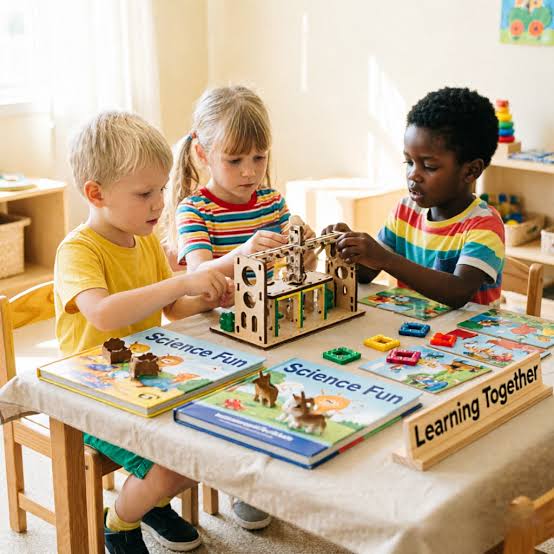
Early childhood researchers have long pointed to the physical environment as a “third teacher,” alongside parents and educators, because children learn as much from how a space is arranged as from direct instruction. A cluttered, chaotic room signals disorder and tends to produce disordered behavior. An organized one, with clear zones for reading, building, and active play, quietly teaches children how to regulate themselves.
Cultivating a space where curiosity thrives, imaginations soar, and hearts are touched by the wonders of God’s creation is an incredible process to be part of. As mums we have the opportunity to provide that for our children yet at the same time, it can feel overwhelming when we think of our tidy homes being transformed into a playground for little hands, minds and feet. Creating a fun learning environment is totally doable in any environment, and with a few systems and strategies in place, we can transform pockets of areas, and most importantly our atmosphere to bring life to all the souls that dwell in it.
Building Physical Safety Without Killing the Fun
Start With the Space Itself
Good layouts reduce accidents before they happen. Wide walkways prevent collisions, low shelving keeps heavy objects out of reach of toddlers, and soft flooring under climbing structures cushions the inevitable falls that come with active play.
Match Equipment to Age
A three-year-old and an eight-year-old don’t belong on the same climbing structure, and most licensed facilities separate play zones by age for exactly this reason. <cite index=”7-1″>Children between 5 and 9 years old have the highest rate of playground-related injury among all age groups</cite>, likely because that’s the age when kids attempt equipment slightly beyond their coordination. Age-appropriate zoning isn’t about limiting adventure; it’s about matching the challenge to the child’s actual physical development.
Supervision Is a System, Not a Vibe
“Watching the kids” sounds simple until you’re managing fifteen of them. Effective supervision means assigning specific zones to specific adults, keeping sightlines clear of blind spots, and rotating attention rather than clustering near the door to chat. Regular equipment inspections matter just as much — loose bolts, splintered wood, and worn matting are cheap to fix and expensive to ignore, and unmaintained equipment is a well-documented driver of avoidable injuries.
Designing for Emotional Safety, Not Just Physical Safety
Physical injuries are visible and countable. Emotional safety is quieter but just as foundational. A child who’s afraid of being mocked for a wrong answer stops raising their hand. A child who never knows what the daily routine will look like spends energy managing anxiety instead of learning.
A few practices consistently show up in classrooms where kids genuinely enjoy being present:
- Predictable routines. Children thrive on knowing roughly what comes next, even when the specific activity changes daily.
- Clear, consistent expectations. Rules that are explained rather than simply enforced tend to be followed more willingly, because kids understand the reasoning behind them.
- Room for mistakes. Environments where errors are treated as normal parts of learning, rather than failures, produce children who try harder things.
- Adults who notice. A quick check-in with a child who seems off, before a problem escalates, does more for classroom culture than any poster on the wall.
Making Learning Genuinely Fun
Fun in a learning context isn’t about constant entertainment. It’s about engagement — the sense that an activity is worth doing on its own terms.
Lean Into Play-Based Learning
Decades of early childhood research support play as a primary vehicle for learning, not a break from it. Building blocks teach physics concepts long before a child could name them. Pretend play develops language and social negotiation skills. Outdoor free play supports gross motor development and, notably, tends to reduce behavioral issues indoors afterward because children have burned off energy that would otherwise surface as restlessness.
Rotate and Refresh Materials
A classroom that looks identical every week stops generating curiosity. Rotating toys, books, and activity stations — even modestly, every few weeks — renews interest without requiring a full budget overhaul. Many educators simply store a portion of materials out of sight and swap them back in later, which makes “new” toys reappear at no cost.
Involve Children in the Process
Letting kids help choose an activity, vote on a class pet’s name, or decorate a shared space builds ownership. Environments children help shape are ones they tend to protect and respect, rather than test the limits of.
Practical Steps for Parents and Educators
- Walk the space from a child’s eye level. Crouch down. Cords, sharp table corners, and unstable furniture become obvious immediately.
- Childproof in layers. Outlet covers, corner guards, and secured bookshelves address the most common household hazards for toddlers and preschoolers.
- Set a realistic supervision ratio. Smaller adult-to-child ratios, especially for children under five, make meaningful supervision possible rather than aspirational.
- Build in outdoor time daily. Fresh air and physical movement support both mood and sleep, which in turn improves behavior during structured learning time.
- Talk with kids about safety, don’t just enforce it. Explaining why a rule exists — “we hold the railing so we don’t fall” — builds understanding that sticks even when no adult is watching.
Frequently Asked Questions
How much screen time is appropriate in a learning environment for young children? Pediatric guidance generally recommends limiting screen use for preschool-aged children and prioritizing hands-on, interactive activities, since passive screen time doesn’t build the same motor and social skills as physical play.
What’s the biggest safety mistake adults make in kids’ spaces? Assuming a space is safe because it looks tidy. Hazards like loose furniture, unmaintained equipment, and blocked sightlines often aren’t obvious until someone specifically checks for them.
Does more structure mean less fun for kids? Not usually. Predictable structure actually frees children to relax into play, because they’re not spending mental energy figuring out what’s expected of them.
Conclusion
Creating a space where kids are both safe and genuinely happy isn’t a one-time project — it’s an ongoing habit of noticing. It means checking the playground surfacing before assuming it’s fine, matching activities to what a child is actually ready for, and paying as much attention to how a child feels in a room as to what’s in it. Get those pieces right, and the fun tends to take care of itself.
Related Posts