
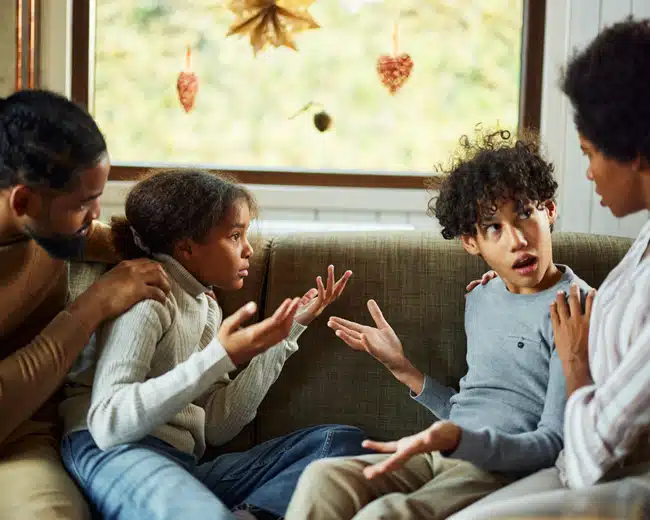
Disagreements are inevitable—between siblings over screen time, classmates during group projects, or friends choosing a game at recess. What isn’t inevitable is that those moments turn into shouting matches, slammed doors, or lasting resentment. Teaching children how to handle disagreements respectfully isn’t just about keeping the peace in the moment; it’s about equipping them with lifelong social-emotional skills that shape how they’ll navigate relationships, workplaces, and civic life as adults.
Why Respectful Disagreement Matters
Conflict is a normal part of human interaction, but how children learn to manage it has lasting consequences. Research spanning more than a decade across multiple schools shows that when students are explicitly taught conflict resolution procedures, they not only retain those skills throughout the school year but also transfer them to family settings and non-school environments. In other words, the way kids learn to disagree at age seven or ten becomes their default approach at seventeen and beyond.
The stakes are higher than just avoiding playground drama. Children who lack tools for respectful disagreement often resort to avoidance, aggression, or passive-aggressive behavior—patterns that can harden into adulthood. Conversely, kids who learn to express differing opinions without attacking the other person develop stronger friendships, better problem-solving abilities, and greater emotional resilience.

What Respectful Disagreement Actually Looks Like
Before children can practice respectful disagreement, they need to understand what it is—and what it isn’t. Many kids conflate disagreement with disrespect, assuming that if they don’t agree, they must be rude (or that the other person is being rude by disagreeing with them).
Separating Disagreement from Disrespect
Respectful disagreement means expressing a different opinion while still valuing the other person’s dignity. It sounds like: “I see it differently” rather than “You’re wrong.” It looks like listening without interrupting, using a calm tone, and avoiding name-calling or dismissive body language.
Disrespect, by contrast, attacks the person rather than the idea: eye-rolling, interrupting, raising one’s voice, using absolutes like “You always” or “You never,” or refusing to engage at all. Helping children distinguish between these two responses is foundational.
Teaching the Language of Disagreement
Children often want to disagree but don’t have the words. Providing simple, reusable phrases gives them a script to fall back on when emotions run high. Useful phrases include:
- “I have a different idea.”
- “Can I explain how I see it?”
- “I’m not sure I understand—can you tell me more?”
- “I disagree, but I want to hear your side.”
- “Let’s find a solution that works for both of us.”
These aren’t just polite platitudes; they’re cognitive tools that slow down reactive responses and create space for dialogue.
Core Skills to Build
Respectful disagreement rests on a handful of teachable skills. These aren’t innate traits some children have and others don’t—they’re behaviors that can be modeled, practiced, and reinforced.
Active Listening
Active listening means paying full attention to the speaker, showing you’re engaged (through eye contact or nodding), and resisting the urge to formulate your rebuttal while they’re still talking. For younger children, this might look as simple as “Look at the person talking” and “Wait until they’re done before you speak.” Older kids can practice paraphrasing: “So what you’re saying is…” to confirm understanding before responding.
Perspective-Taking
Perspective-taking—the ability to imagine how a situation looks from someone else’s point of view—is crucial for empathy and reduces the likelihood of escalating conflict. Ask children questions like: “How do you think they felt when that happened?” or “What might they be worried about?” This doesn’t mean they have to agree, but it helps them see the other person as human rather than an obstacle.
Using “I” Statements
“I” statements help children express their feelings without sounding accusatory. Instead of “You’re being unfair,” a child can say, “I feel frustrated when I don’t get a turn.” This shifts the focus from blame to personal experience, which is less likely to trigger defensiveness.
Emotional Regulation
Disagreements often escalate because big emotions take over. Teaching children to identify and name their feelings—”I’m angry,” “I feel left out”—gives them a way to express emotion without acting out. Pair this with calming strategies like taking a deep breath, counting to five, or stepping away briefly if needed.
A Both/And Mentality
One of the most powerful shifts is helping children understand that two people can hold different views without one being entirely right and the other entirely wrong. This “both/and” thinking—versus “either/or”—opens the door to compromise and creative problem-solving.

Practical Strategies for Parents and Educators
Teaching these skills doesn’t happen in a single conversation. It requires consistent modeling, low-stakes practice, and timely feedback.
Model Respectful Disagreement at Home
Children watch how adults handle conflict. When parents disagree with each other—or with their child—using calm language, active listening, and “I” statements, they demonstrate that disagreement doesn’t have to mean discord. If you lose your temper, acknowledge it: “I shouldn’t have raised my voice. Let me try again.”
Practice During Calm Moments
Role-playing works best when emotions aren’t already high. Use everyday scenarios—choosing a movie, dividing chores, picking a game—to practice disagreement scripts. Make it playful: debate whether pineapple belongs on pizza or which ice cream flavor is best. The goal is to normalize disagreement as a routine part of conversation, not a crisis.
Praise the Process, Not Just the Outcome
When a child handles a disagreement well—listening without interrupting, using a respectful tone, offering a compromise—acknowledge it specifically: “I noticed you waited until your sister was done talking before you responded. That was really respectful.” This reinforces the behavior more effectively than generic praise like “Good job.”
Intervene Strategically During Conflicts
When disagreements do escalate, resist the urge to immediately solve the problem or assign blame. Instead, guide children through the steps: “What did you hear them say?” “How are you feeling?” “What’s one way you could both get what you need?” This teaches them to resolve conflicts themselves rather than relying on adults to arbitrate every dispute.
Give It Time
Like any social-emotional skill, respectful disagreement takes repetition. Children will forget their scripts, revert to old habits, or test boundaries. Consistency matters more than perfection. Over time, the behaviors become internalized.
Facts and Statistics About Conflict Resolution in Children
Common Challenges—and How to Address Them
Even with the best intentions, teaching respectful disagreement comes with hurdles.
Younger Children Lack Vocabulary
Kids under six may not have the words to articulate their feelings or perspectives. In these cases, adults can scaffold: “It sounds like you’re upset because you wanted a turn. Is that right?” Then offer simple phrases they can repeat.
Sibling Rivalry Runs Deep
Long-standing dynamics between siblings can make respectful disagreement feel unnatural. Parents may need to intervene more frequently at first, modeling language and enforcing boundaries around tone and behavior.
Digital Influences and Polarization
Older children are increasingly exposed to divisive messaging online, where disagreement is often framed as moral failure or personal attack. Counter this by discussing what they see: “That person is calling the other names instead of explaining their view. What could they have said instead?”
Cultural Differences in Communication
Some families or cultures value direct confrontation; others prioritize harmony and indirect expression. There’s no single “right” way to disagree, but the core principles—respect, listening, avoiding harm—remain universal.
Frequently Asked Questions
At what age should I start teaching respectful disagreement?
You can begin as early as age three or four with simple concepts like “use kind words” and “wait your turn to talk.” More nuanced skills like perspective-taking and “I” statements develop gradually between ages five and ten.
What if my child refuses to engage and just walks away?
Walking away can be a healthy choice if emotions are too high. Teach children that it’s okay to say, “I need a break, but I want to talk about this later.” The key is returning to the conversation once calm.
How do I handle disagreements between my child and their teacher or coach?
Encourage your child to express their perspective respectfully to the adult first, using “I” statements. If the issue persists, you can facilitate a conversation, modeling the same respectful tone you’ve taught at home.
Conclusion
Teaching kids to handle disagreements respectfully isn’t about eliminating conflict—it’s about transforming it. When children learn to listen, express their views without attacking, and seek solutions that honor everyone’s needs, they gain tools that serve them far beyond the playground. These skills don’t develop overnight, but with consistent modeling, practice, and patience, respectful disagreement becomes second nature. And in a world where polarization often dominates public discourse, that may be one of the most valuable gifts we can give the next generation.
Related Posts
