
Every adult who has children understands that raising children is both difficult and incredibly gratifying, particularly when the kids develop into responsible, self-reliant, compassionate, successful individuals and parents in their own right. After careful research and extensive interviews with new and old parents, we believe the following factors are crucial to growing kids well.
1. Leadership
Children require a strong, responsible, compassionate leader who is dedicated to their best interests. Children don’t need to take care of their parents. Until they are adults, children do not need to be best friends, mates, or pals with their parents. Kids are kids. They require leaders to steer, mentor, and lead them during their formative years. The parents who must take the lead in raising their children are those leaders.
Children require a solid parental foundation that prioritizes them over their parents’ work, relationships, pastimes, and occupations if they are to succeed in life. It is never appropriate to view children as a parent’s appendages. Until the children are of legal age, the children are the parent’s life. When this commitment is given to children, it is a boon to their early development and later success as responsible and independent adults.
2. Structure
Kids require structure. They require fundamental rules. They must be aware of their capabilities and limitations. They must understand that there will be repercussions if they deviate from the parameters of the framework established for them. Everything is copacetic if they don’t cross the lines.
Ethical, moral, social, familial, national, and spiritual laws and regulations govern life and society. Life is like this. Children learn not to respect laws and rules because they were never taught to do so or to live by them in the first place when they are not established at a young age. As a result, they run the risk of growing up to be lawless, rebellious, and possibly troubled adults. In order to produce the order required for a solid framework in which everyone thrives, succeeds, and learns to handle the boundaries of life in all its parts, the home—and, in my case, the karate studio—should reflect specific rules.
3. Cause and Consequence
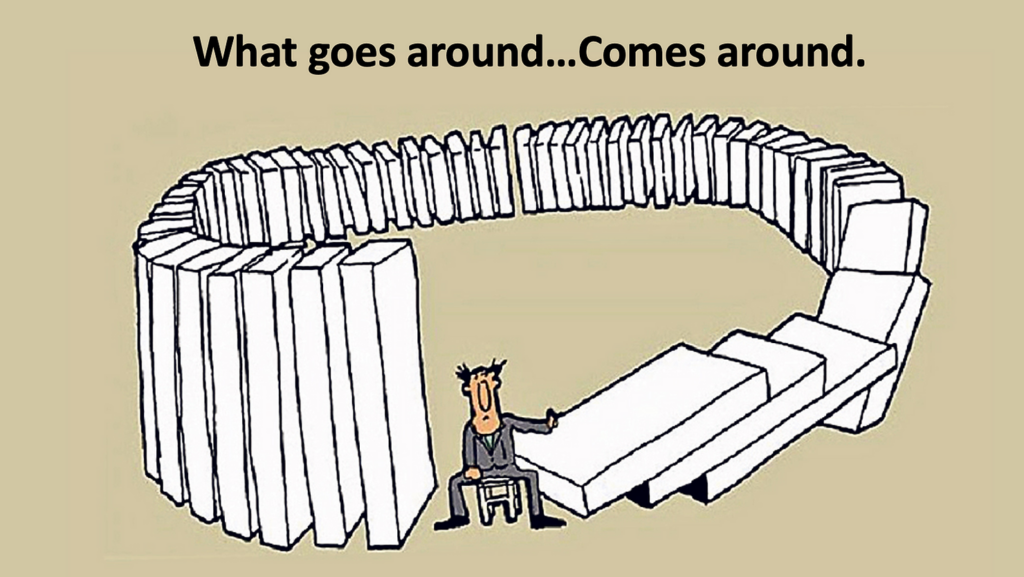
Children must be taught that every cause has an effect, that every action has a reaction, and that a wise person always considers the repercussions of his acts before committing them in order to maintain the structural aspects of their lives. One of life’s laws is cause and effect. It’s more than just a pleasant idea. Everyone is subject to the rule of cause and effect, and if youngsters are not taught this fundamental and important law of life, they will quickly run into a brick wall.
If youngsters are not educated that every cause has an effect, nothing positive will ever occur in their lives. Good deeds have positive outcomes, while evil deeds have negative outcomes. Living a life of causes without results is a delusion and a sign of future difficulties.
4. Discipline
The key to success is discipline. An uncontrolled and out-of-control mass of weeds, vines, bushes, trees, and grass develops in a garden that is not routinely weeded, watered, fertilized, manicured, and clipped. A life without discipline is possible, but it won’t be fulfilling any more than an untended garden would continue to be lovely. Babies are the embodiment of life in all its innocence, beauty, and purity. Children must be taught self-control, judgment, self-control, and discipline in order to maintain this state of affairs.
For instance, an unruly horse can be hazardous, but it can also be a great resource, friend, companion, and helper if it is educated to be calm, disciplined, and under control. Children who lack discipline have the potential to become not only like untidy gardens but also like wild horses—uncontrollably hazardous to both themselves and other people. A cursory look at the lives of numerous celebrities exposes the human rubble left behind by an unruly lifestyle.
5. Ownership
Our life is our responsibility, which is one of the most essential tenets of a successful life. In a similar vein, it is crucial for parents to instill in their children the idea that “it’s your life; it’s your responsibility” so that by the time they are adults, it will be evident.
My kids will always be welcome in my house, just as your kids will undoubtedly be in yours. This is how loving families function. Having said that, children must have a functional awareness of their responsibility for their lives in order to ensure that they lead successful lives. When the parents are gone, what happens? When they pass away, what happens? What happens if children have no accountability for their own lives?
Children develop self-responsibility because of their parents’ love. To test this, simply ask yourself as a parent, “What if my children were stranded on a desert island by themselves? Could they survive? Would they be strong enough? Resilient enough? Resourceful enough? Balanced enough?
If the children were raised with the understanding that It’s your life; it’s your responsibility, they would at least have a fighting chance of survival. However, if they were looking to someone or something else to take care of them, the prospect of their survival would be dubious at best.
Too many children are not being taught this basic life principle of taking personal responsibility. This is obvious because there are too many adults who do not understand it or live by it. Regardless of what anyone wants to believe, no one is responsible for us but us. It is not the government’s responsibility to take care of us. It is not the responsibility of our friends, neighbors, associates, even family once we become of age to take care of us. It is solely our responsibility. Raising children to live by this principle is critical to their well-being and success in life.
6. Sense of Values
What has happened to individuals having a sense of values in their lives? It seems our society is more concerned with its indulgences, pleasures and gratifications than its set of values. To me as a father, grandfather, teacher and citizen, this is extremely sad. To live only to indulge, play and gratify oneself can only result in an empty, non-substantive life. Great people throughout history have lived by a sense of values not gratifications. As the great Dr. Albert Einstein admonished: The goal is to raise the spiritual values of society, and Try not to become a man of success but rather to become a man of value.
Values include but are not limited to: humility, discipline, self-control, patience, kindness, generosity, thoughtfulness, consideration, respect, balance, honesty, integrity, a strong work ethic and doing the right thing rather than the profitable thing. As American intellectual, writer, reporter, political commentator and Harvard graduate Walter Lippman stated in his Preface to Morals (1929): He has honor if he holds himself to an ideal of conduct though it is inconvenient, unprofitable, or dangerous to do so. Where is this value today? Something to think about and certainly important for children to know about.
7. Right Rewards
Giving right rewards at the right time for the right reason is important in raising children. My message to my own children and students was and is this: We do the right thing because it is the right thing to do, not because there is a reward attached to it. Doing the right thing is its own reward. When children learn this simple lesson of life, they do things out of principle not out of expectation of some material reward. The constant giving of only material rewards such as money, candy, clothes or cars does nothing to further our children’s character, which is the foundation of their lives. Occasionally, external rewards are effective, but doing the right thing because it is the right thing to do is the right thing to do when raising children.
8. Appropriate Praise
Praise is a necessary act when raising children. However, praise should be given when appropriate and that means when the child performs well, meets a high mark, displays excellent character, etc. Praising a child “just because” gives him a false sense of himself. Telling a child he or she is great when they’ve behaved badly is doing them a great disservice. Certainly, the word “great” is overused in today’s society. Telling someone he’s great when he’s not lowers the bar and keeps lowering it until there is no bar to reach up to, only to stoop to. The result is that children and society keep degrading and descending, not upgrading and ascending.
9. Respect
Having respect for oneself and others is critical to a well-functioning life. Yet, it is sorely lacking today. For example, adults should never allow children to address them as “dude” or “buddy” or “hey you.” How will such a child fair in the real world when he applies for a job and addresses the boss as “dude?” What has happened to children referring to an adult woman as Mrs., Ms., Miss, Ma’am or an adult male as Mr. or Sir? I personally find it interesting that many young people today simply don’t know how to address an adult.
By virtue of the fact that adults have preceded children in age and experience, they need to be given respect by children, not vice-versa. The flow of respect goes from child to adult first, not the other way around. For example, in the military it is not incumbent upon an officer to salute a non-commissioned soldier. It is always the lower ranking soldier’s responsibility to pay respect to higher ranking soldiers. This is life. Who in their right mind would order God to do something or call him “dude?” The same process applies to students and teachers, players and coaches, children and parents. There is a hierarchy to life and it needs to be recognized and respected.
Read More Articles Here!
Building A Strong Educational Foundation In Children
30 Fun Things To Do With Your Child Before They Start Kindergarten
Related Posts